Indices

CSI Semiconductor Index vs. STAR 50 Semi: The Style Divergence
Two portfolios can carry the semiconductor label and still express very different investment ideas. One may concentrate on the businesses that supply fabrication plants with equipment and materials. Another may lean toward chip designers, manufacturers, and technology companies whose valuations depend on expectations for future growth. When their returns diverge, the explanation often lies less in competing views of the semiconductor industry than in the exposures built into their construction.

Taiwan Semiconductor Index vs. SOX Correlation: The Decoupling Signal
Two semiconductor indices can follow the same global growth story and still tell different market stories. Taiwan’s semiconductor equities reflect the economics of manufacturing, design, packaging, and testing within a deeply connected production ecosystem. The Philadelphia Semiconductor Sector Index, better known as SOX, captures a different combination of semiconductor businesses through U.S.-listed securities. Their relationship offers a useful window into how investors price the chip cycle.

MSCI Korea Index Memory Duo Weight: Samsung and SK Hynix Dominance
A country index sounds like a broad invitation: buy one basket and participate in an entire economy. The MSCI Korea Index offers something more distinctive. Its exposure to South Korea’s equity market is heavily shaped by Samsung Electronics and SK Hynix, two companies whose fortunes connect Korean stocks to the global demand for memory chips. For investors, that creates a compelling opportunity and a question that deserves careful attention: how much diversification does a country label actually provide?

Semi Index Dividend and Buyback Yield: The Total Return Decomposition
Semiconductor investing usually begins with technology: faster accelerators, denser memory, more advanced packaging, and the equipment needed to manufacture them. Yet the return delivered by a semiconductor index depends on something less glamorous as well: what companies do with the cash those technologies generate.
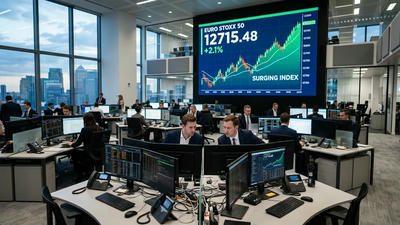
SOX Index at 12,715: The AI-Driven Re-Rating Trajectory
At 12,715, the semiconductor index invites a bigger question than whether chip stocks have climbed too far: what kind of industry is the market now pricing? The traditional answer centers on inventories, manufacturing utilization, and periodic recoveries in electronics demand. The emerging answer puts computing infrastructure, scarce technical capabilities, and the economics of artificial intelligence closer to the center.

Nasdaq Global Semiconductor Index (GSOX) 1-Year Return: The 105% Surge
A semiconductor benchmark gaining 105% in one year is more than an impressive performance statistic. It signals a substantial change in how investors value the companies supplying the world’s computing infrastructure. Share prices are reflecting expectations about demand, profitability, competitive advantages, and the durability of investment in increasingly sophisticated chips.
Emerging vs. Developed Market Semi Indices: The Risk-Adjusted Return Gap
A semiconductor index can deliver a spectacular return and still be the less attractive investment. The missing pieces are the volatility endured, the drawdown survived, and the currency exposure carried along the way. Comparing emerging-market and developed-market semiconductor indicators therefore requires more than placing two performance charts side by side.

2027 SOX Target Price: The Sell-Side Divergence Summary
A 2027 target for the Philadelphia Semiconductor Index looks precise: one number, one horizon, one implied return. Underneath that number, however, sit several competing forecasts. How long can AI investment accelerate? When does memory supply catch demand? Will industrial chips recover? And what valuation will investors pay when those earnings finally arrive?

SOX vs. NDX Ratio: The Historic High and What It Means
When semiconductor stocks outperform the Nasdaq-100, the market is making a statement about where it expects growth, profits, and investment returns to concentrate. When that outperformance pushes the SOX-to-NDX ratio toward a historic high, the statement becomes harder to ignore. Chips are no longer simply participating in the technology rally; they are competing to become its defining economic engine.
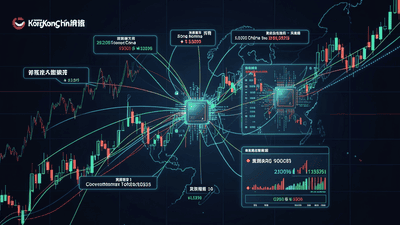
The Impact of Rising Semi Weight in Hang Seng Tech Index on HK Market Dynamics
The Hang Seng Tech Index has always been a useful lens on Hong Kong’s technology market, but in 2026 it is becoming something more interesting: a barometer for how much semiconductor exposure the city’s equity market is willing to absorb. As the semiconductor weight rises inside the index, the whole market dynamic changes with it. Suddenly, Hong Kong is not just a platform for internet and consumer tech names. It is becoming a more explicit proxy for AI hardware, chip supply chains, and the broader semiconductor cycle.